High-End Outdoor Grill Components: 2026 Buyer's Guide
Table of Contents
- What Separates High End Outdoor Grill Components From Mid-Range
- Built-In vs. Freestanding: Which Configuration Fits Your Build
- Comparison Table: Premium Built-In Grill Heads by Size and BTU
- Power Burners, Sear Zones, and Side Burners That Earn Their Space
- Built-In Outdoor Kitchen Storage
- Outdoor Kitchen Design Best Practices for Component Layout
- Gas Manifolds, Ignition Systems, and Fit: Compatibility Before You Buy
- Maintenance and Long-Term Ownership
- Frequently Asked Questions
Last Updated: September 18, 2026
What Separates High End Outdoor Grill Components From Mid-Range
High-end outdoor grill components typically emphasize durable materials, thoughtful construction, cooking performance, and long-term serviceability. Features such as stainless-steel construction, substantial cooking grids, replaceable burners, and available replacement parts can all contribute to long-term value.
This guide explains the specifications that matter, the differences between built-in, freestanding, and modular configurations, and the compatibility checks to make before ordering.
Stainless Steel Grades, Grate Thickness, and Why They Matter
Stainless-steel grade is one important factor in outdoor grill durability, but it should be considered alongside construction quality, welds, drainage, ventilation, exposure, and routine maintenance.
304 stainless steel is commonly used in premium outdoor cooking equipment because of its corrosion resistance and suitability for outdoor environments. When comparing grills, review the materials used not only on the exterior panels but also in the firebox, hood, burners, cooking grids, and other high-heat areas.
Built-In vs. Freestanding: Which Configuration Fits Your Build
The configuration decision is really about the structure around the grill, not the grill itself. A built-in head depends on the island, counter, or masonry surround to hold, vent, and protect it. A freestanding cart is a complete, self-supporting unit. Choosing wrong usually shows up after the counter is finished.
How Built-In Grill Heads Are Installed
Built-in grill heads are designed to fit into a properly sized outdoor kitchen opening or enclosure. The exact support method, cutout dimensions, ventilation requirements, and clearances depend on the specific grill.
Before construction begins:
- Use the manufacturer's published cutout dimensions rather than the grill's overall exterior dimensions.
- Confirm the required clearances from combustible materials.
- Determine whether an insulated jacket, liner, or other enclosure protection is required for your installation.
- Follow the manufacturer's ventilation requirements for the enclosure.
Always design the island around the installation instructions for the exact grill model being used.
How Freestanding Carts Differ
A freestanding grill carries its own frame, shelves, and often its own side burner and tank storage. It needs no cutout, liner, or island, making it the right answer when:

- The setup may move, a rental, a home you plan to sell, or a patio you may reconfigure.
- The budget is going toward the head rather than the masonry.
- Gas is supplied by a portable LP tank rather than a plumbed line.
Modular Kits: The Middle Path
Modular outdoor kitchen kits use pre-engineered frames, panels, and appliance openings to simplify many of the design decisions involved in a traditional site-built outdoor kitchen.
Because compatible components are designed to work together, a modular system can reduce some of the complexity associated with appliance fit, cabinetry, and ventilation. Buyers should still confirm the installation requirements for every grill and appliance included in the system.
A Quick Decision Framework
Situation |
Better fit |
Why |
|---|---|---|
Permanent island, plumbed gas, custom stone |
Built-in head |
Integrated appearance with maximum design flexibility; requires more planning |
Rental, movable setup, tank fuel |
Freestanding cart |
No cutout, no liner, repositionable |
Want built-in look without masonry |
Modular kit |
Pre-engineered cutout and ventilation |
Adding a grill to an existing counter |
Verify cutout first |
Retrofits only work if dimensions and clearances match |
Ventilation Requirements Matter
Enclosed outdoor kitchen islands must be designed so heat and any leaked fuel do not accumulate inside the enclosure.
Ventilation requirements vary by appliance, fuel type, enclosure design, and manufacturer. Some installations use multiple ventilation openings positioned according to the appliance manufacturer's instructions.
Follow the installation manual for the exact grill and fuel type rather than relying on a universal vent layout.
Comparison Table: Premium Built-In Grill Heads by Size and BTU
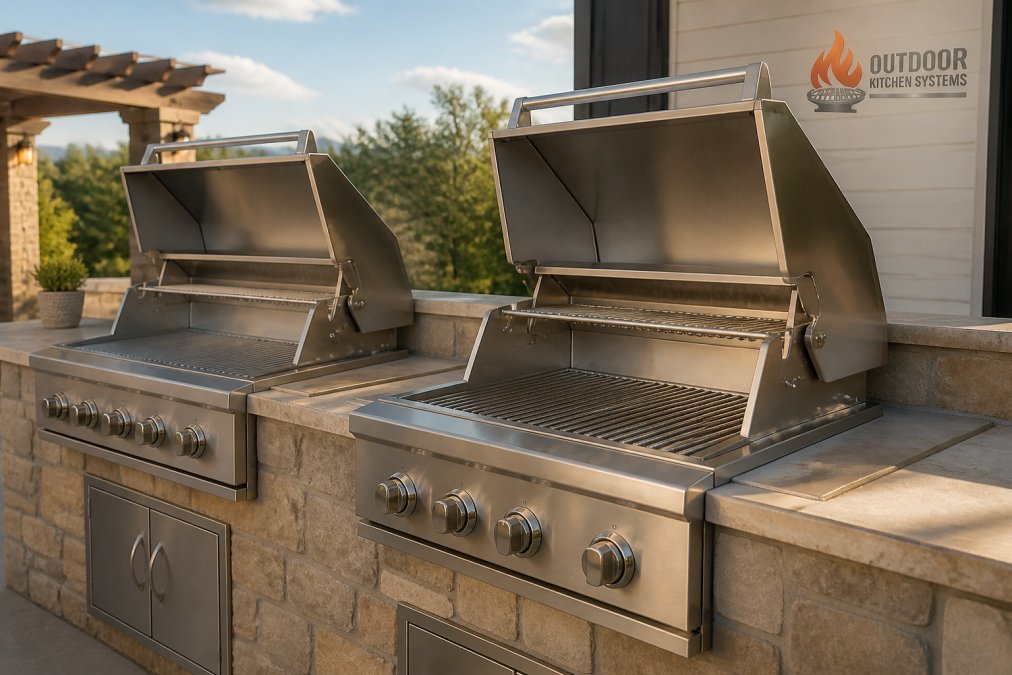
The table below compares selected built-in grill heads available through Outdoor Kitchen Systems. Specifications vary by model, so review the individual product listing and manufacturer documentation before ordering.
Model |
Width |
Published Heat Output |
Cooking Area |
|---|---|---|---|
56 in |
123,000 BTU |
1,260 sq in |
|
Napoleon 700 Series 44-Inch |
45.5 in |
108,000 BTU |
1,100 sq in |
QUEST 42″ Built-In |
42 in (106.7 cm) |
18,000 BTU burners |
Not listed |
TRL Pro 40″ Built-In Grill |
40 in (101.6 cm) |
18,000 BTU burners |
Not listed |
Napoleon 700 Series 38-Inch |
39.5 in |
78,000 BTU |
945 sq in |
TRL Pro 32″ Built-In Grill |
32 in |
18,000 BTU burners |
Not listed |
Napoleon 700 Series 32-Inch |
32 in |
66,000 BTU |
786 sq in |
Power Burners, Sear Zones, and Side Burners That Earn Their Space
A side burner earns its counter space when you actually use it. The Summerset TRL Double Side Burner - Liquid Propane runs two 12,000 BTU main burners with flame thrower ignition, covering simmering sauces and sautéing sides while the main grill runs.

Infrared Sear Burners and Rotisserie Back Burners
Infrared burners reach searing temperature faster than standard burners and put out more direct heat. The Summerset TRL Pro Drop-In Infrared Sear Burner produces 20,000 BTUs of precision heat and replaces any main burner on a TRL Pro grill.
Built-In Outdoor Kitchen Storage
Built-in access doors, drawers, and cabinets keep grilling tools, accessories, cookware, and other outdoor kitchen supplies organized and close to the cooking area.
Choose storage components that are outdoor-rated and appropriate for your climate and enclosure. Matching the finish and style of the grill can also create a more cohesive outdoor kitchen design.
Key Takeaway: Confirm cabinet dimensions, ventilation needs, and appliance clearances before finalizing the storage layout.
Outdoor Kitchen Design Best Practices for Component Layout
Layout is where a premium component list either becomes a kitchen that works or a collection of expensive parts that fight each other. These rules cause the most rework when skipped.
Plan the Cooking Workflow
Think about how you will move between the grill, preparation space, refrigeration, storage, and any secondary cooking appliances. Keep frequently used areas reasonably close while leaving enough room for more than one person to work comfortably.
Specialty appliances also need their own working space. A pizza oven benefits from a nearby landing area, while a side burner should have convenient preparation space around it.
Clearances That Actually Matter
Clearance is the most common source of layout regret. Verify these categories against each product's published spec, they are not universal values:
- Lid swing: A grill's height with the lid open is greater than with it closed. The Napoleon Prestige PRO 825, for example, stands 25.25 inches closed and 30.25 inches open, so anything directly behind it, a backsplash, a window, a pergola post, has to clear the open-lid arc.
- Clearance to combustibles: Every built-in head publishes a minimum distance to combustible materials. Wood framing, wood pergola posts, and composite decking all count. Non-combustible surrounds still need the head's specified air gap.
- Ventilation: Follow the grill manufacturer's enclosure-ventilation requirements for the specific fuel type and installation. Proper ventilation helps prevent excessive heat and leaked fuel from accumulating inside an enclosed island.Service access: Leave room to pull a drip tray, remove a burner, or reach a gas connection without disassembling the counter.
Gas Routing Before the Counter Goes Up
Gas line routing is a pre-build decision. Settle two things early:
- Fuel type. Confirm whether the appliance is configured for natural gas or liquid propane before ordering. Do not attempt to change fuel types unless the manufacturer specifically approves conversion for that exact model and provides an approved conversion method or kit.
- Connection point. Where the gas stub, shutoff, and flexible connector land determines where the head can sit. Moving a stub after the counter is poured can be a complex task.
The Compatibility Question Most Guides Skip
Mixing components from different manufacturers can create fit, installation, or warranty complications.
Before combining brands, compare:
- Grill and accessory cutout dimensions
- Required liners or insulated jackets
- Enclosure ventilation requirements
- Fuel type and gas connections
- Required service access
- Manufacturer warranty and installation requirements
A Layout Checklist
- Provide comfortable working and circulation space around the grill.
- Keep useful preparation space close to cooking appliances.
- Position side burners where they can be used without interfering with the grill.
- Place storage where tools and accessories are easy to reach.
- Follow manufacturer clearances when locating refrigeration near cooking equipment.
- Keep gas shutoffs, connections, drip trays, and service areas accessible.
- Follow the manufacturer's ventilation requirements for enclosed islands.
Gas Manifolds, Ignition Systems, and Fit: Compatibility Before You Buy
Compatibility should be confirmed before ordering. A built-in grill must work with the planned cutout, enclosure, fuel type, ventilation, and utility connections. A grill head has to match the cutout, gas type, and fuel connection already planned for the build.
Maintenance and Long-Term Ownership
Long-term ownership costs depend on material durability, replacement-parts availability, maintenance requirements, climate, and how frequently the grill is used.
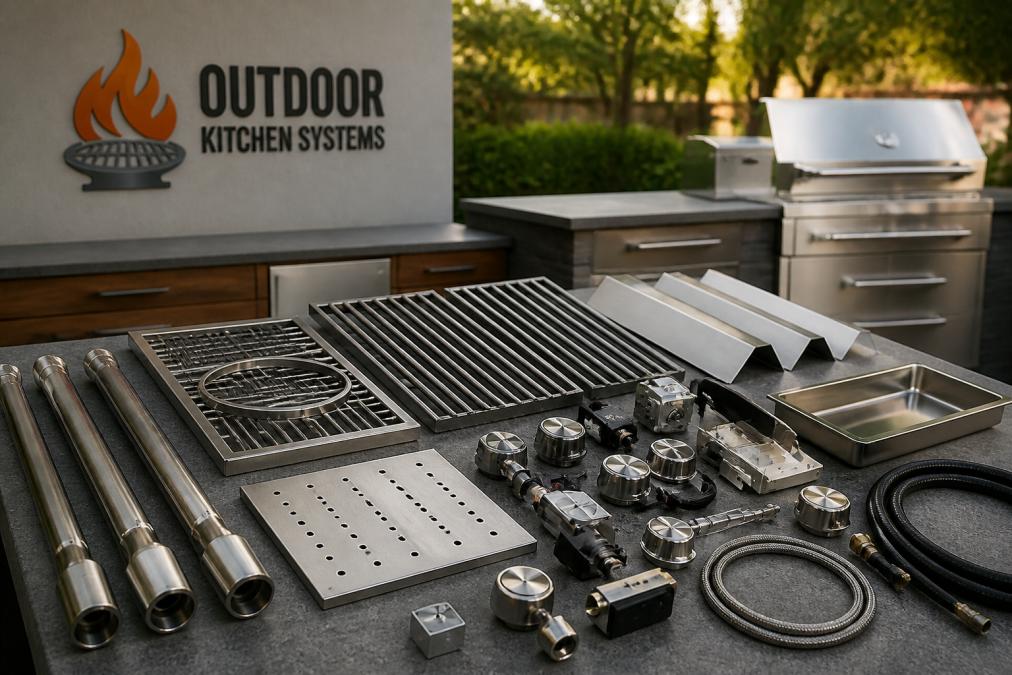
When comparing premium components, consider whether replacement burners, igniters, cooking grids, drip trays, and other service parts are readily available.
Follow the manufacturer's inspection, cleaning, and replacement recommendations rather than assuming every component follows the same maintenance schedule.
Frequently Asked Questions
What defines a high-end outdoor grill component?
Premium outdoor grill components typically combine durable outdoor-rated materials, solid construction, useful cooking features, thoughtful design, and long-term serviceability. When comparing products, look at the materials used in the firebox, hood, burners, cooking grids, and cabinetry, along with warranty coverage and replacement-parts availability.
Why should I invest in stainless steel outdoor kitchen components?
Stainless steel is widely used in outdoor cooking equipment because of its corrosion resistance, durability, appearance, and ability to withstand outdoor conditions when properly maintained. The specific stainless grade, construction method, climate, exposure, and maintenance all affect long-term performance.
How do I choose the right size for built-in grill components?
Start with your available space and the way you normally cook. Consider how many people you typically serve, how many foods you cook at once, and how much countertop space you want to preserve. Then compare the overall dimensions, cooking area, cutout requirements, required clearances, and space needed for side burners, storage, and other appliances. Bigger is not automatically better if it leaves too little room for preparation and circulation.
Are premium outdoor kitchen components worth the investment?
They can be for buyers who value durable construction, specific cooking features, coordinated outdoor kitchen components, warranty support, and replacement-parts availability. The right spending level depends on how often you cook outdoors, the features you will actually use, your climate, and how long you expect to keep the outdoor kitchen.
What should I check before mixing grill heads and side burners from different lines?
Confirm three things: gas type, cutout dimensions, and finish. Natural gas and liquid propane components are not interchangeable without a conversion kit made for that specific model or a different model, so match the fuel your home already supplies. Verify the drop-in cutout matches your counter opening exactly. Then check that finishes and control styles align visually, since a matte black grill head next to a stainless side burner reads as two different builds.
Choosing high-end outdoor grill components is as much a planning decision as a purchasing decision. Confirm the cutout dimensions, fuel type, clearances, storage, and utility requirements before construction begins.
Outdoor Kitchen Systems offers Napoleon and Summerset grill heads, side burners, storage, and other outdoor kitchen components. Need help confirming fit? Contact us to review dimensions, fuel type, and product compatibility before you order.

Written by Hector Navarro