Article: How to Prevent Outdoor Kitchen Rust: 2026 Guide
How to Prevent Outdoor Kitchen Rust: 2026 Guide
Table of Contents
- Why Outdoor Kitchens Rust: Materials, Moisture, and Climate
- A Weekly and Monthly Outdoor Kitchen Rust Prevention Routine
- Protective Covers and How to Winterize Outdoor Kitchen Equipment
- Cleaning Stainless Steel Outdoor Kitchens and Caring for Cast Iron
- Removing Surface Rust and Preventing Galvanic Corrosion
- What to Look for When Choosing Outdoor Kitchen Drawer Slides
- Coastal and High-Humidity Rust Prevention
- Conclusion
- Frequently Asked Questions
Last Updated: September 23, 2026
Why Outdoor Kitchens Rust: Materials, Moisture, and Climate
Preventing outdoor kitchen rust starts with understanding how moisture, oxygen, contaminants, and exposure affect metal over time. Even corrosion-resistant materials such as stainless steel benefit from regular cleaning, drying, and proper maintenance. The Corrosion Doctors' guide to rust and oxidation explains that iron-bearing metals give up electrons when water and air reach the surface.
Stainless Steel Is Rust-Resistant, Not Rust-Proof
Stainless steel is a steel alloy with enough chromium to form a protective oxide layer on its surface. The layer rebuilds itself when exposed to air, which is why stainless survives weather that destroys plain steel.
Three conditions break down the film:
- Surface rust from iron particles left by tools or nearby construction
- Pitting from chlorides in pool water, salt, and some cleaners
- Galvanic corrosion that can occur when dissimilar metals are in contact in the presence of moisture or another conductive environment
A Weekly and Monthly Outdoor Kitchen Rust Prevention Routine
A maintenance routine is the cheapest rust insurance you can buy. Most rust on outdoor appliances starts small and stays invisible until it is expensive.
Weekly tasks:
- Wipe grill hoods, side shelves, and drawer fronts with a damp cloth and mild soap
- Rinse away pollen, food splatter, and cooking grease
- Dry every surface with a clean towel
- Check under the grill for pooled water after storms
Monthly tasks:
- Remove grates and scrub the firebox interior
- Clear debris from burner tubes and ventilation slots
- Inspect seams, welds, and screw heads for orange speckling
- Follow the manufacturer's recommendations for stainless-steel polish, protectant, or other surface treatments, if applicable
Protective Covers and How to Winterize Outdoor Kitchen Equipment
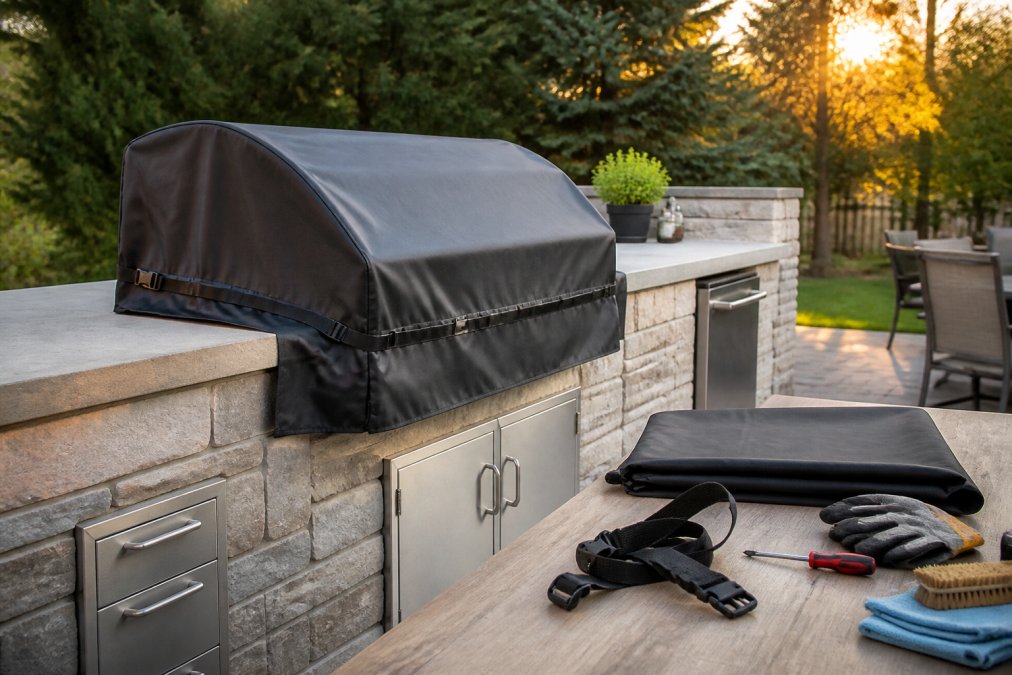
A quality cover does more than block rain. It stops leaves, bird droppings, and tree sap from bonding to stainless, and keeps dew from sitting on the surface.
Choosing a Cover That Breathes
A breathable cover lets trapped moisture escape while keeping rain out. Avoid covers that trap moisture against the equipment. A properly fitted, ventilated cover can help protect outdoor appliances while allowing moisture to escape.
Look for these features:
- Water-resistant fabric with UV inhibitors to stop fading and cracking
- Built-in vents that reduce mildew and improve wind resistance
- Adjustable straps or a fitted cut
- Hanging loops for storage during grilling season
- Clean every surface and let it dry completely
- Follow the appliance manufacturer's winterization and fuel-storage instructions. If the appliance uses propane, store or disconnect the cylinder only as directed by the manufacturer and applicable safety requirements.
- Remove and store small components indoors
- Cover the grill, refrigerator, and storage cabinets
- Check the cover after the first storm
Cleaning Stainless Steel Outdoor Kitchens and Caring for Cast Iron
Cleaning requirements vary by stainless-steel grade, finish, appliance, and manufacturer. Mild soap, water, and a soft cloth are commonly used for routine cleaning, but always review the manufacturer's care instructions before using polishes, acids, abrasive products, or specialty cleaners.
Which Cleaner Works on 304 vs 316 Stainless Steel
304 stainless is the workhorse grade in most grills, refrigerators, and cabinet frames. It resists rain, humidity, and food splatter but is more vulnerable to chlorides, so avoid bleach and rinse pool-water overspray promptly.
Surface |
Routine Care |
Important Considerations |
|---|---|---|
304 stainless |
Mild soap, water, soft cloth |
Rinse contaminants and dry thoroughly |
316 stainless |
Mild soap, water, soft cloth |
Still requires routine cleaning, especially near salt exposure |
Brushed stainless |
Cleaner in the direction of the grain |
Avoid aggressive abrasives |
Polished stainless |
Use products approved for the finish |
Test specialty cleaners in an inconspicuous area |
Always follow the care instructions provided by the appliance or component manufacturer.
Fix Existing Rust Before You Prevent New Rust
Most people searching for rust prevention already have a spot or two. Removing it first stops corrosion from spreading under the surface.
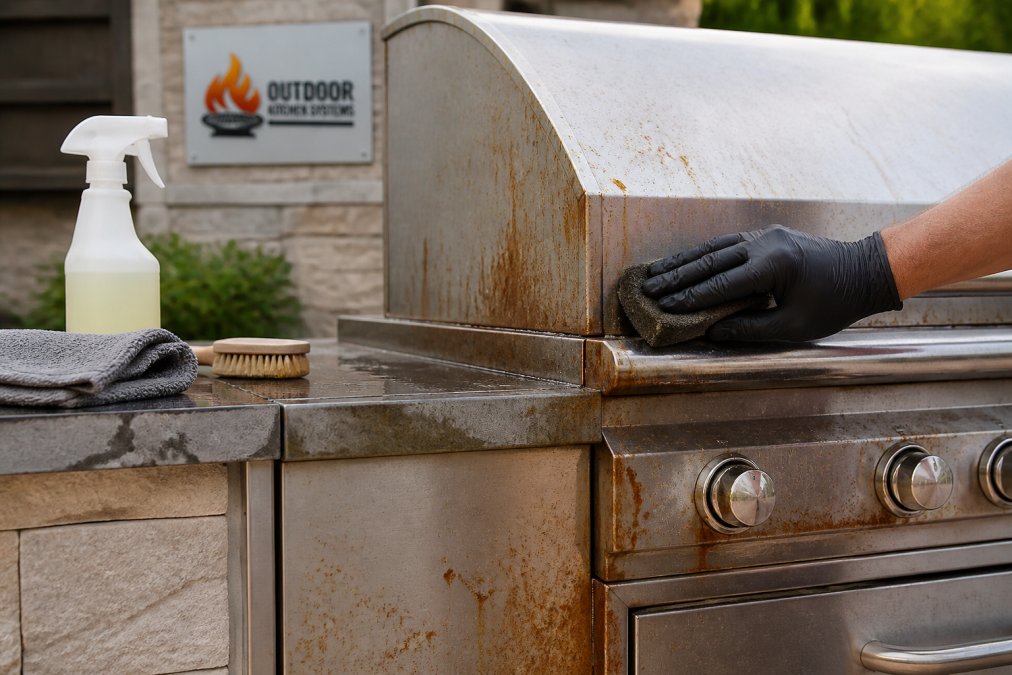
- Identify the rust type. Orange speckling on the surface is usually surface rust from embedded iron particles. Dark pitting that has eaten into the metal is deeper and may need professional attention.
- Scrub light surface rust with a non-metallic pad and mild soap, working with the grain.
- Rinse thoroughly and dry completely with a clean cloth.
- Apply a stainless steel cleaner formulated for outdoor use, or a commercial rust remover labeled safe for stainless.
- For persistent corrosion, specialty rust-removal or passivation products may be appropriate, but use only products approved for the specific stainless-steel finish and follow the manufacturer's directions.
- After cleaning, follow the equipment manufacturer's recommendations for any polish, protectant, or surface treatment.
Seasoning Cast Iron Grates and Griddles
Seasoning is the process of baking a thin layer of oil into cast iron to create a natural, non-stick, rust-resistant coating. Skip it and bare iron starts oxidizing the first humid night.
How to season cast iron grates and a griddle:
- Cast-iron grates and griddles may require seasoning to help protect the cooking surface from moisture and corrosion. Cleaning and seasoning instructions vary by product, so follow the manufacturer's directions for the specific grate or griddle.
In general, keep cast iron clean and dry, avoid leaving water on the surface, and apply cooking oil or seasoning only as directed by the manufacturer.
Removing Surface Rust and Preventing Galvanic Corrosion
Surface rust comes off. Pitting does not. That difference decides how much time you spend on repair.
For light surface rust:
- Scrub the spot with a non-metallic pad and a little mild soap
- Rinse and dry the area completely
- Apply a stainless steel cleaner made for outdoor use
- Wipe with the grain, then buff dry
- When dissimilar metals are used together, follow the manufacturer's installation requirements and use approved isolating hardware where required.
- Inspect fasteners, joints, and contact points periodically for signs of corrosion.
What to Look for When Choosing Outdoor Kitchen Drawer Slides
Outdoor drawer slides are exposed to moisture, grease, dirt, and temperature changes, so material quality and maintenance matter.
- Stainless steel construction rated for outdoor use, not indoor cabinet hardware
- Sealed ball bearings that keep moisture and dust out of the track
- Full-extension travel so you can reach the back of deep drawers
- Weight ratings matched to what you actually store
- Soft-close mechanisms that reduce slam damage over time
Slide Material |
Outdoor Consideration |
|---|---|
Coated carbon steel |
Inspect coating regularly for chips or exposed metal |
304 stainless steel |
Common corrosion-resistant choice for outdoor applications |
316 stainless steel |
Offers additional resistance to chloride exposure and may be useful in demanding coastal environments |
Coastal and High-Humidity Rust Prevention
Salt air changes the rules. In a coastal environment, salt deposits sit on stainless and pull moisture out of the air, holding it against the metal. Salt exposure can accelerate corrosion, making cleaning and material selection especially important in coastal environments. The fix is not just more rinsing. It is choosing the right grade, controlling humidity inside enclosed cabinets, and breaking the moisture bridge between dissimilar metals.
Choose the Right Grade Before You Choose the Cleaner
Material selection is the first line of defense in salt air.
- 316 stainless steel contains molybdenum, which can provide additional resistance to chloride exposure compared with 304. In coastal environments, consider 316 stainless where available while also evaluating the manufacturer's construction, finish, warranty, and maintenance requirements.
- 304 stainless steel is widely used in outdoor equipment, including in humid environments. Near salt exposure, more frequent cleaning and fresh-water rinsing may be beneficial according to the manufacturer's care instructions.
- Powder-coated or painted carbon steel is a poor fit for salt air. Once the coating chips, the underlying steel rusts quickly.
- Aluminum frames and brass fittings should be kept physically separated from stainless hardware to prevent galvanic corrosion.
Control Humidity Inside Enclosed Cabinets
Most coastal rust starts inside enclosed outdoor kitchen cabinets, not on exposed surfaces. Trapped humid air condenses on cold metal overnight and stays there.
Practical humidity-control strategies:
- Ventilation first. Cabinets with louvered doors, vented panels, or open backs let moist air escape instead of pooling.
- Desiccants for closed storage. Rechargeable silica gel packs or moisture-absorbing canisters placed inside drawers and closed cabinets reduce condensation on stored tools and grates.
- Air gaps under appliances. Raising a refrigerator or storage unit slightly off a solid base lets air move underneath and dry the underside.
- Avoid sealing damp air in. A cover placed over a wet grill traps moisture against the surface. Let equipment dry before covering.
A Stricter Coastal Maintenance Routine
Build a routine that matches the salt load. In coastal environments:
- Rinse salt residue from stainless surfaces regularly with fresh water
- Dry equipment thoroughly after cleaning
- Inspect seams, fasteners, welds, and hidden areas for early signs of corrosion
- Cover equipment only after it is clean and dry
- Follow the manufacturer's recommendations for protectants, cast-iron seasoning, and seasonal maintenance
Maintenance frequency should reflect the level of salt exposure, weather conditions, and the manufacturer's care instructions.
Watch for galvanic corrosion in humid climates especially. Moisture in the air is enough to bridge two different metals, so keep stainless hardware away from aluminum frames and brass fittings.
Conclusion
Preventing outdoor kitchen corrosion requires both the right materials and consistent maintenance. Stainless steel, cast iron, hardware, and other outdoor components each have different care requirements, and climate can significantly affect how quickly corrosion develops.
Keep equipment clean and dry, address standing water and salt exposure, use properly fitted covers where appropriate, and follow the manufacturer's care instructions for each product. A small amount of routine maintenance can help protect the appearance and performance of your outdoor kitchen over time.
Frequently Asked Questions
Does stainless steel rust in outdoor kitchen environments?
Yes. Stainless steel can develop surface rust when salt air, moisture, or debris sit on it long enough to break down its protective oxide layer. Grades like 304 resist corrosion well, but they still need regular cleaning with mild soap and a soft cloth. Rinse and dry after cooking, and apply a protective sealant on exposed surfaces to keep outdoor kitchen rust from starting.
How often should I clean my outdoor kitchen to prevent corrosion?
Wipe high-use surfaces weekly with mild soap and water, and do a deeper degreasing monthly. After every cook, clear food residue and grease from grates, griddles, and drawers. In coastal or humid areas, rinse and dry more often because salt air speeds up oxidation. A steady weekly maintenance routine matters more than occasional heavy scrubbing.
What should I look for when choosing outdoor kitchen drawer slides?
Choose slides rated for outdoor use with corrosion-resistant materials, sealed bearings, and smooth full-extension movement. Avoid hardware that traps water, since moisture buildup is the top cause of seized slides. Stainless or coated steel slides hold up better than bare steel. If you are unsure which drawer systems fit your island, talk to a specialist before ordering.
How do I remove surface rust from my outdoor grill or kitchen drawers?
Start with the cleaning method recommended by the appliance manufacturer. For light surface corrosion, this may involve a soft non-metallic pad, mild cleaner, and cleaning in the direction of the grain. Avoid steel wool or aggressive abrasives that can damage the finish. For persistent corrosion, use only products specifically approved for stainless steel and for the appliance's particular finish.

Written by Hector Navarro