Article: How to Choose the Right Grill for Your Outdoor Kitchen: A Complete Buyer’s Guide
How to Choose the Right Grill for Your Outdoor Kitchen: A Complete Buyer’s Guide
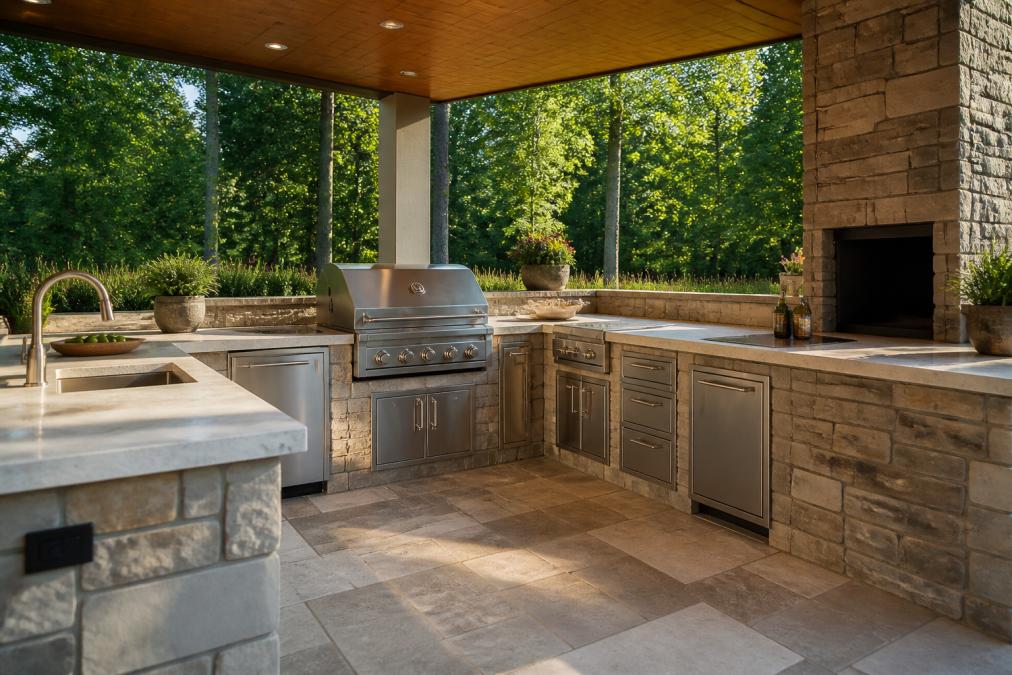
Building an outdoor kitchen is about more than creating a place to cook. It is about creating a space where you can entertain, spend time with family, and enjoy cooking outdoors without constantly running back inside.
At the center of that space is usually the grill.
With so many sizes, fuel types, configurations, and features available, choosing the right grill can quickly become overwhelming. The best grill is not necessarily the largest or the one with the longest list of features. It is the one that fits the way you cook, the space you have available, and the outdoor kitchen you want to create.
This guide walks through the most important factors to consider before buying a grill for your outdoor kitchen.
Start With How You Actually Cook
Before comparing brands or features, think about how you expect to use your outdoor kitchen.
Someone who regularly cooks for a large family or entertains guests will have very different needs from someone who primarily grills dinner for two or three people.
Consider how often you cook outdoors, how many people you normally serve, and whether you want the grill to be your primary outdoor cooking appliance or just one part of a larger setup.
For example, an outdoor kitchen might eventually include a grill, pizza oven, side burner, refrigerator, storage, and additional prep space. Thinking about the complete kitchen early can help prevent you from purchasing a grill that takes up more space than you intended.
Built-In vs. Freestanding Grills
One of the first decisions is whether you want a built-in grill or a freestanding grill.
Built-in grills are designed to be installed into an outdoor kitchen island or cabinetry system. They create a clean, integrated appearance and are a natural choice for homeowners building a permanent outdoor cooking space.
A built-in setup also gives you flexibility to surround the grill with storage drawers, access doors, refrigeration, trash storage, side burners, and countertop space.
Freestanding grills provide a different kind of flexibility. Because the grill is mounted on a cart or cabinet base, it can generally be positioned without building a permanent island around it. This can work well for patios, decks, rental properties, or homeowners who are not ready to construct a complete outdoor kitchen.
If your long-term goal is a fully integrated outdoor kitchen, a built-in grill will usually provide the more cohesive design.
Choose the Right Fuel Type
The next major decision is fuel.
Natural gas can be an excellent choice when your home already has access to a natural gas line and you want a permanent outdoor kitchen. It provides the convenience of a continuous fuel supply, eliminating the need to replace propane tanks.
Propane offers more installation flexibility because you are not dependent on a permanent natural gas connection. For some homeowners, that makes propane the simpler option.
Neither fuel is automatically better. The right choice depends on your property, kitchen location, existing utilities, and how permanent you want the installation to be.
If you are planning a new outdoor kitchen from the ground up, determine your fuel source before ordering your grill. Gas type is not something you want to discover was incorrect after the appliance arrives.
Don't Choose a Grill Based on Size Alone
A larger grill can be appealing, but bigger is not always better.
Your grill needs to be proportional to the rest of the outdoor kitchen. Installing an oversized grill in a relatively small island can leave too little room for food preparation, serving, storage, or other appliances.
Think about your normal cooking needs rather than the largest gathering you might host once or twice a year.
You should also consider the physical dimensions of the grill—not just its cooking surface. Built-in grills require proper cutout dimensions, clearances, ventilation, and surrounding materials.
Before designing cabinetry or countertops, always work from the installation requirements for the specific appliance you plan to purchase.
Pay Attention to Construction Materials
An outdoor grill spends its life exposed to heat, moisture, temperature changes, grease, and the elements. Construction quality matters.
Stainless steel is commonly used in premium outdoor cooking equipment because of its appearance, durability, and resistance to corrosion. However, not every grill is constructed the same way.
When comparing models, look beyond the exterior appearance. Consider the cooking grates, burners, firebox, lid, hardware, and internal components.
A well-designed outdoor kitchen is a long-term investment, so the durability of the grill should carry significant weight in your decision.
Think Beyond the Main Burners
The way you cook should determine which additional features are valuable to you.
For some homeowners, powerful traditional grilling is the priority. Others may want more versatility for searing, rotisserie cooking, smoking, sauces, side dishes, or high-temperature cooking.
Features such as infrared burners, rotisserie systems, side burners, smoker accessories, warming racks, lighting, and smart controls can make an outdoor kitchen more versatile.
But more features are not automatically better.
Choose features that match food you actually cook. Paying for capabilities you rarely use does little to improve your outdoor kitchen.
Plan the Entire Cooking Zone
The grill should be treated as part of a cooking zone rather than as an isolated appliance.
Ideally, you want usable countertop space nearby for preparing food and setting down trays, utensils, seasonings, and finished dishes.
Storage close to the grill also makes a major difference. Drawers can hold grilling tools and accessories, while cabinets can provide space for cookware and other outdoor kitchen supplies.
Refrigeration can reduce trips inside the house, while side burners allow you to prepare sauces or side dishes without leaving the outdoor kitchen.
Planning these elements together creates a more functional space than simply installing the largest grill you can fit.
Leave Room for Future Upgrades
Outdoor kitchens often evolve.
You may begin with a grill and storage and later decide you want a pizza oven, refrigerator, beverage center, additional burners, or another specialty cooking appliance.
Planning extra countertop space, electrical access, storage, and utility connections during the original design can make future expansion much easier.
A well-planned outdoor kitchen should work for you today without limiting what you might want to add later.
Common Mistakes to Avoid
Some of the most expensive outdoor kitchen problems can be avoided before construction begins.
Common mistakes include choosing appliances after the island has already been designed, failing to confirm gas type, ignoring manufacturer cutout requirements, leaving too little prep space, and purchasing appliances based primarily on appearance.
Another mistake is treating every outdoor appliance as interchangeable. Built-in cooking equipment has specific installation and ventilation requirements, and those requirements can vary between models.
The safest approach is to select your major appliances first and design the outdoor kitchen around their actual specifications.
Consider the Complete Outdoor Kitchen
Your grill is important, but it should work with the rest of the space.
A well-designed outdoor kitchen balances cooking equipment with preparation space, storage, refrigeration, seating, and the way people will move around the area.
Someone who loves pizza might prioritize a grill and pizza oven combination. A frequent entertainer might place more emphasis on refrigeration and beverage storage. Someone who enjoys traditional grilling may put more of the budget into the grill itself.
There is no single configuration that works for every homeowner.
The goal is to create the outdoor kitchen that fits the way you cook and entertain.
Finding the Right Grill
Choosing an outdoor grill becomes much easier when you work through the decisions in the right order: determine your cooking needs, decide between built-in and freestanding, select your fuel type, identify the appropriate size, and then compare the features that matter most to you.
Premium manufacturers offer a wide range of outdoor cooking options, including grills from brands such as Napoleonand Summerset, making it possible to build everything from a straightforward grilling station to a complete outdoor kitchen.
At Outdoor Kitchen Systems, you can explore grills, pizza ovens, outdoor kitchen components, storage, refrigeration, and accessories designed to help you build a complete outdoor cooking space.
Ready to start planning your outdoor kitchen? Explore our related outdoor cooking products and find the equipment that fits the way you cook.

Written by Hector Navarro